
Meet the Artist
Jordan Wheatley is a multi-faceted artist and academic. Her area of study within Art History pertains to medieval Europe and religious imagery and iconography. Jordan works as a Research Administrator and Pre-Award Specialist, and she maintains a diverse portfolio of grants for multiple high-achieving faculty members within the School of Medicine.
Jordan is also an amateur dog trainer and has owner-handler trained her own service dog to perform medical and psychiatric tasks.
Jordan has achieved her Bachelor’s of Art from Herron School of Art + Design in Art History along with minors from the School of Liberal Arts in Anthropology, Arabic and Islamic Studies, and History.
Photography
✳︎
Videography
✳︎
Mixed Media
✳︎
Filmmaker
✳︎
Academic
✳︎
Photography ✳︎ Videography ✳︎ Mixed Media ✳︎ Filmmaker ✳︎ Academic ✳︎
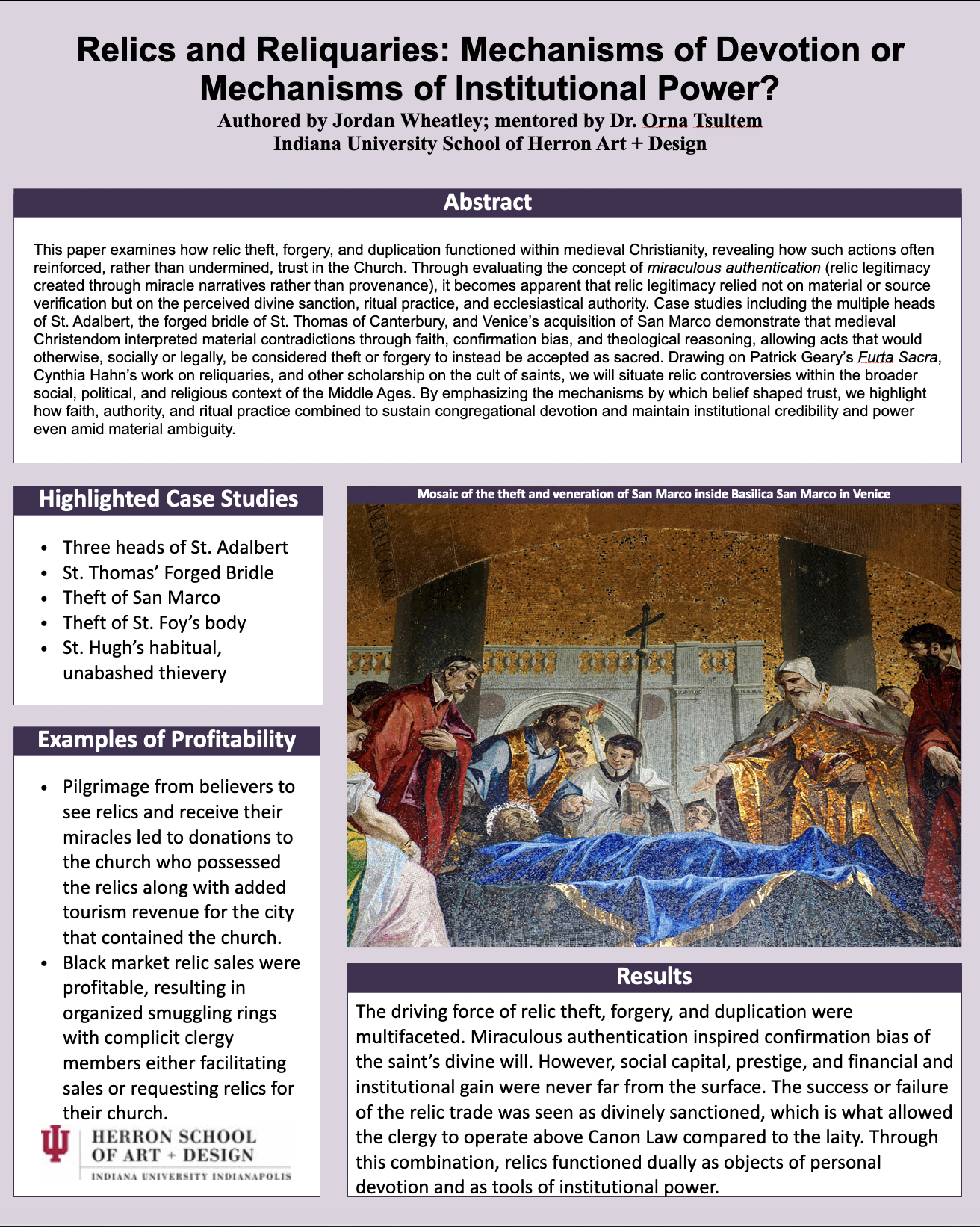
Relics and Reliquaries: Mechanisms of Devotion or Mechanisms of Institutional Power?
ABSTRACT
This paper examines how relic theft, forgery, and duplication functioned within medieval Christianity, revealing how such actions often reinforced, rather than undermined, trust in the Church. Through evaluating the concept of miraculous authentication (relic legitimacy created through miracle narratives rather than provenance), it becomes apparent that relic legitimacy relied not on material or source verification but on the perceived divine sanction, ritual practice, and ecclesiastical authority. Case studies including the multiple heads of St. Adalbert, the forged bridle of St. Thomas of Canterbury, and Venice’s acquisition of San Marco demonstrate that medieval Christendom interpreted material contradictions through faith, confirmation bias, and theological reasoning, allowing acts that would otherwise, socially or legally, be considered theft or forgery to instead be accepted as sacred. Drawing on Patrick Geary’s Furta Sacra, Cynthia Hahn’s work on reliquaries, and other scholarship on the cult of saints, we will situate relic controversies within the broader social, political, and religious context of the Middle Ages. By emphasizing the mechanisms by which belief shaped trust, we highlight how faith, authority, and ritual practice combined to sustain devotion and institutional credibility even amid material ambiguity.
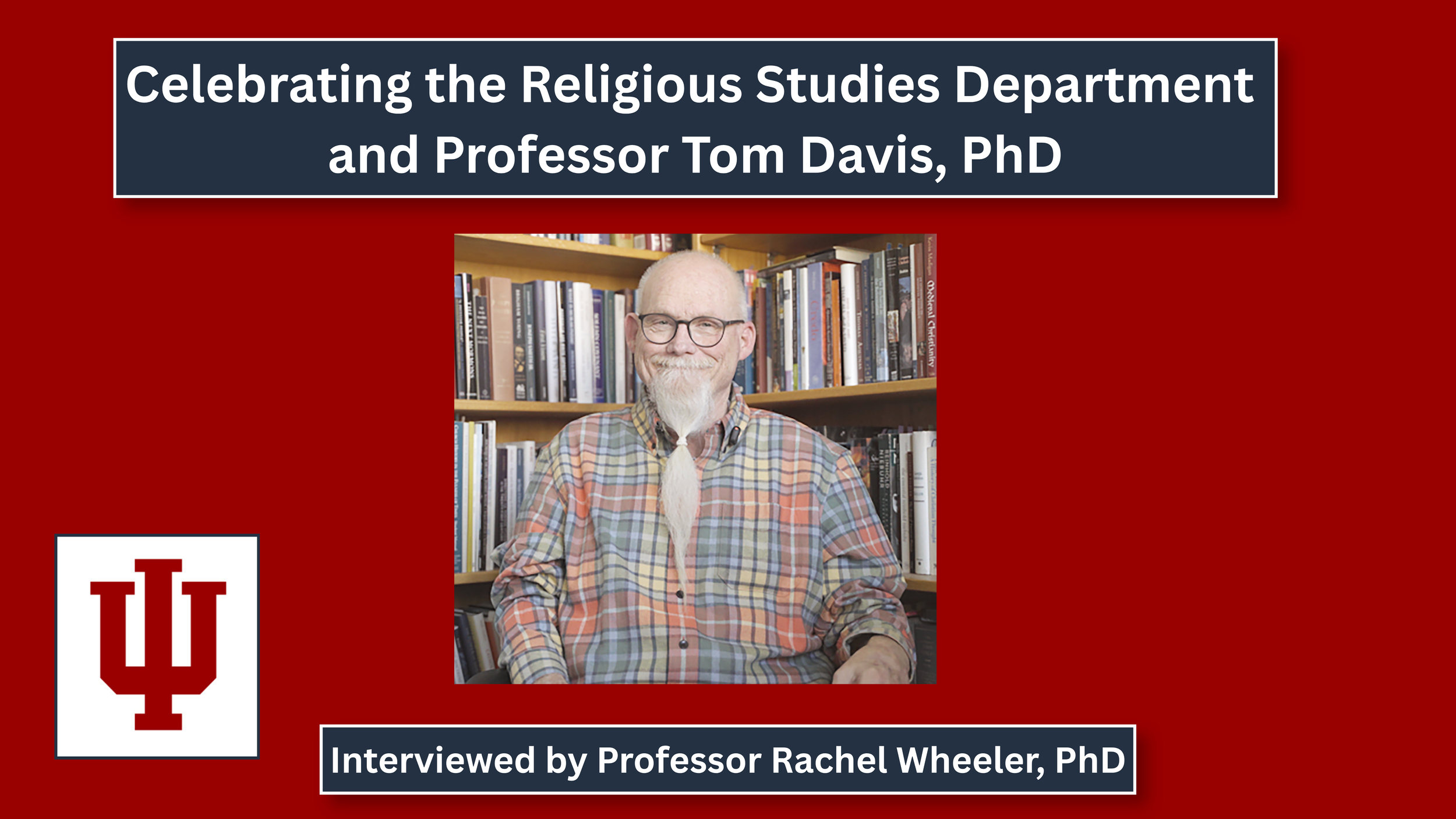
Religious Studies Internship
Filmed, produced, and edited this interview to celebrate and document the Religious Studies Department and celebrate the retirement of Professor Tom Davis after nearly 37 years of dedicated service to IU Indianapolis.

Digital and Graphic Design
Proficient in Adobe PhotoShop, Premiere Pro, Illustrator, and After Effects.